

Yoga and meditation are often presented as two distinct practices.
One would be in motion, the other stationary.
One physical, the other mental.
And yet… in practice, they are intimately linked. Almost inseparable.
Yoga prepares you for meditation.
Meditation is an extension of yoga.
And together, they create a much richer experience than each of these practices taken separately.
If you've ever wondered why certain yoga sessions leave you feeling incredibly calm, centered, and aligned — it's not a coincidence.
It's not just about stretching or muscle strengthening.
It is this subtle synergy between the body, the breath, and attention .
Let's explore together how yoga, meditation and breathing can interact to nurture a holistic, lasting… and deeply embodied well-being.

1. Yoga and meditation: two paths, one intention
In the yogic tradition, yoga is not limited to postures.
Asanas are only one of the eight pillars of yoga, along with breathing (pranayama), concentration and meditation (dhyana).
In other words: yoga is not an alternative to meditation.
It serves as their training ground .
Conscious movement allows:
- to soothe the nervous system
- to release physical tension
- to stabilize attention
The result? The body becomes less distracting, the mind more available. And meditation—often dreaded—suddenly becomes more accessible.

2. Why combining yoga and meditation changes everything
Practiced together, yoga and meditation have an effect on several levels:
- Physical: muscle relaxation, improved posture, deeper breathing
- Mental: stress reduction, improved clarity, decreased rumination
- Emotional: emotion regulation, sense of grounding, more self-compassion
- Energy: smoother circulation, a feeling of inner balance
Yoga prepares the body.
Meditation sharpens listening skills.
And breath connects the two.

3. Breath: the bridge between body and mind
It is impossible to talk about synergy without mentioning breathing.
Breath is the true common thread between yoga and meditation.
In yoga, breathing:
- supports the movement
- indicates the limits to be respected
- invites you to slow down
In meditation, it becomes:
- anchor point
- object of observation
- tool for regulating the nervous system
And that's where breathwork comes in.

4. Breathwork: when breathing becomes a transformative practice
Breathwork encompasses all techniques of conscious breathing.
Some are very gentle, others more intense, but all have a direct impact on mental and emotional state.
Some common practices:
- Abdominal breathing: to calm and soothe
- Coherent breathing: to balance the nervous system
- Nadi Shodhana (alternate nostril breathing): to clarify and refocus
- Ujjayi: deep, audible breathing, often used in yoga
Breathwork acts like a switch. It allows you to quickly move from a state of agitation to a state of presence.
Integrated into a yoga session or just before meditation, it facilitates a deeper immersion.

5. The main types of meditation (and how to approach them without pressure)
Good news: there isn't just ONE way to meditate. There are different entry points, depending on temperament, needs, and life circumstances.
5.1 Mindfulness Meditation
This is the most well-known method. It consists of observing what is present — sensations, thoughts, emotions — without judgment.
Perfect after a gentle yoga session, when the body is already relaxed.
Benefits:
- stress reduction
- improved body awareness
- stepping back from thoughts
5.2 Guided Meditation
Ideal for those who struggle to be alone with their thoughts. A voice guides attention, sometimes through visualization or a body scan.
Very complementary to restorative yoga or yin yoga.
5.3 Breath Meditation
Here, breathing becomes the main focus of meditation. Simple, effective, profoundly regulating.
Perfect after a dynamic session to regain calm.
5.4 Mantra Meditation
Repeating a word, sound, or phrase helps to stabilize the mind. It can be silent or sung.
It works particularly well after chest-opening postures.
5.5 Meditation in Motion
Good news for those who think they “don’t know how to meditate”: walking, breathing, moving slowly can also be a form of meditation.
Yoga then becomes embodied meditation.

6. How to practically integrate yoga and meditation into your daily life
No need for long hours or complicated rituals. The key is regularity and simplicity.
Here are some realistic ideas:
- 10 minutes of yoga + 5 minutes of meditation
- A short, conscious breath before the session
- A relaxation posture followed by a guided meditation
- A slow, mindful sun salutation as a moving meditation
Even a single posture, held with care, can become a form of meditation.

7. Dynamic yoga or gentle yoga: what role for meditation?
The two are complementary.
- Dynamic yoga: helps release tension, channel energy, and prepare for more static meditation
- Gentle/yin/restorative yoga: promotes introspection, letting go, and extended meditation
There is no “best” option. There is only the one that suits your current state.
By practicing yoga and meditation together, something subtly changes.
Breathing becomes a spontaneous part of daily life.
The body becomes a point of reference.
The mind calms down more quickly.
This is no longer a practice that is done.
It's a way of being.
And that's where the synergy fully operates: when the calm of the mat enters everyday life.

In conclusion
Yoga and meditation are not two practices to be piled onto a wellness to-do list.
These are two languages that speak about the same subject: presence.
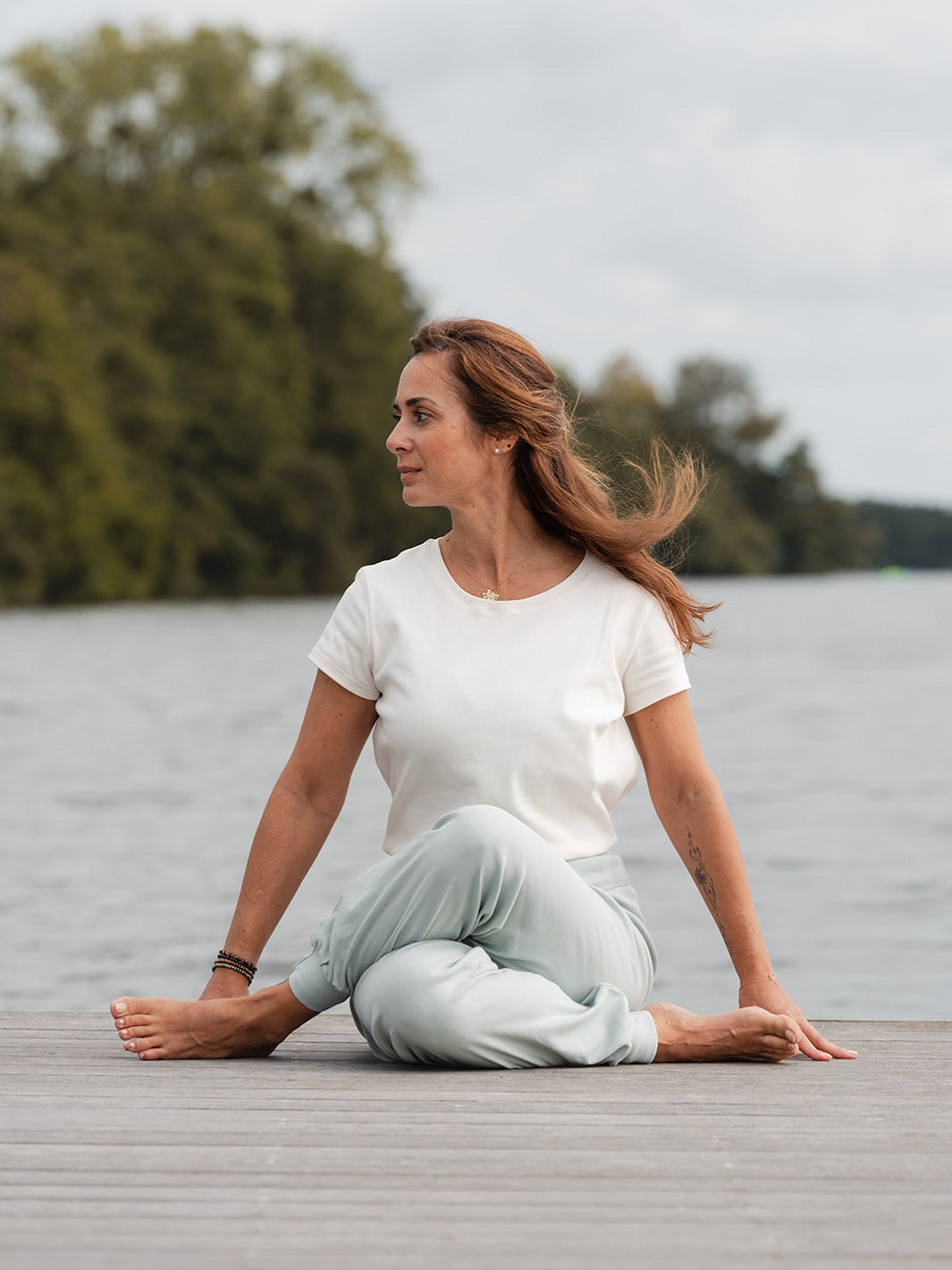
Yoga helps you to inhabit your body.
Meditation teaches you to inhabit the moment.
Breath connects the two.
No need to do more. Just do it consciously.
And sometimes, all it takes is a rug, a breath… and a little listening 💛


Leave a comment